

There’s a stretch of mornings in the Metro East, usually starting in late August, when the air finally cools off. The humidity breaks. You step out the door, take a deep breath, and remember why you fell in love with running in the first place. That’s also when fall marathon season clicks into gear, and it’s when smart fall marathon training separates the runners who finish strong from the ones who limp through the last six miles.
If you’re eyeing the Belleview Main Street Marathon in September, a Chicago marathon weekend, or any 26.2 on your fall calendar, the work you do over the next few months matters more than race day itself. This guide walks through how to build mileage safely, structure your long runs, eat for the work you’re doing, and avoid the injuries that take down half of all first-time marathoners. No fluff. Just the stuff that actually helps you cross the finish line.
Why Fall Is the Best Marathon Season

Fall marathons are popular for a reason, and that reason shapes how fall marathon training should look. You spend the summer doing your long runs in cooler morning temperatures and finish race day in 50- to 60-degree weather, which is close to ideal for running 26.2 miles. Spring marathons, by contrast, mean training through icy January long runs.
For Metro East runners, the timing also lines up beautifully with the local race calendar. The Belleview Main Street Marathon falls in September, several big Midwest events run from late September through early November, and Chicago is a short drive away. That gives you a real local target instead of training in a vacuum.
Build a Base Before Marathon Training Starts
Here’s something most beginner training plans skip past too quickly. A standard 16-week marathon plan assumes you can already run about 15 to 20 miles a week and finish a 5- or 6-mile run without falling apart. If that’s not you yet, jumping straight into a marathon plan is one of the fastest ways to get hurt.
Spend four to eight weeks building a base first. That means running three or four times a week, keeping all of it conversational and easy, and gradually working up to where a 5-mile run feels manageable. Once you’re there, you have the foundation to start a real marathon plan.
If you’re brand new to running and not sure where to begin, our Couch to 5K guide is the right starting point. Build that base. Marathon training will still be there when you’re ready.
The 16-Week Marathon Training Framework
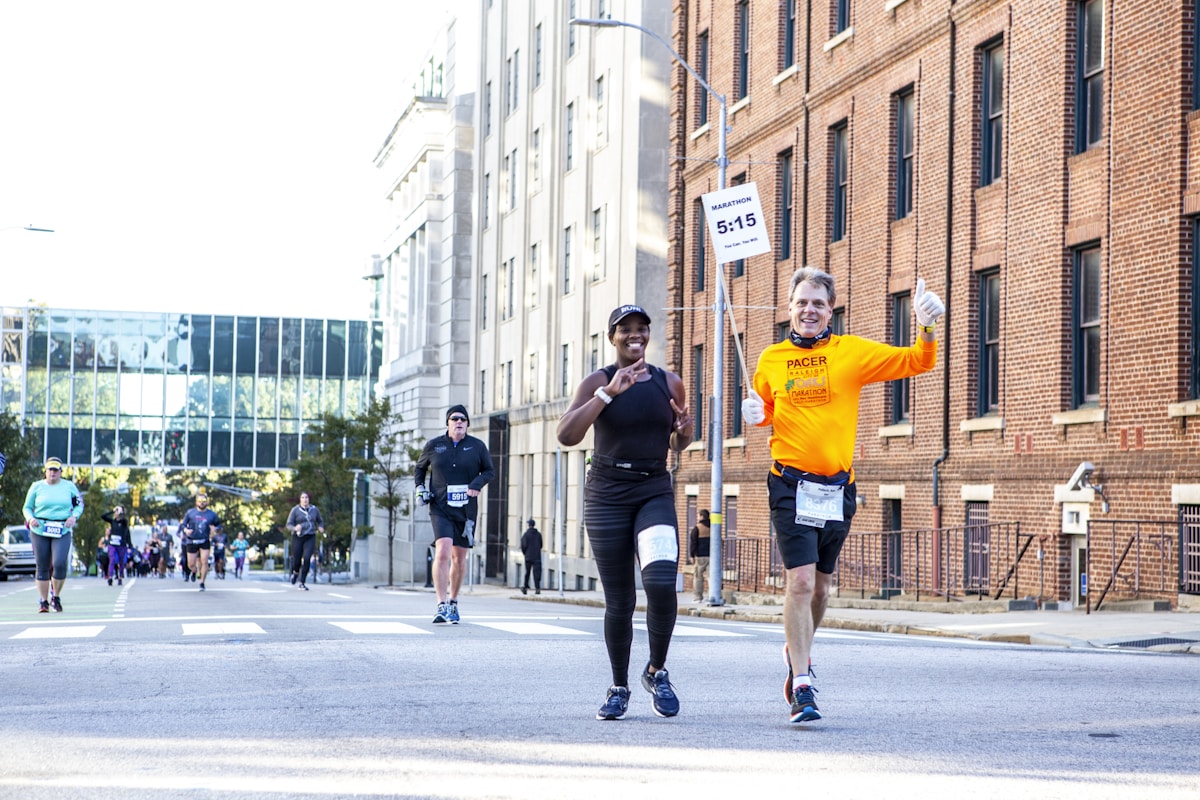
Most marathon plans run 16 to 20 weeks. A 16-week plan is a great fit for runners who already have that base in place and want a structure that builds without dragging on. According to Marathon Handbook, novice plans typically progress from 25 miles per week up to a peak of around 40 miles, with long runs reaching 18 to 20 miles.
The structure most coaches agree on looks like this:
- One long run per week, usually on Saturday or Sunday
- One quality workout, like a tempo run or intervals, midweek
- Two or three easy runs at conversational pace to fill in the rest of the week
- One or two strength or cross-training sessions on non-running days
- One full rest day, no exceptions
One principle to anchor your whole plan: the 80/20 rule. About 80 percent of your weekly miles should feel easy, and only 20 percent should be hard. Running every single mile at a moderate or hard effort is the most common mistake new marathoners make, and it’s a fast track to burnout and injury.
Long Runs: The Anchor of Your Plan
Your weekly long run is the workout that builds the endurance you need on race day. Plans typically start with a 6- to 8-mile long run in week one and add roughly a mile or two each weekend, with cutback weeks every third or fourth week to let your body absorb the load.
Most plans peak with a 20-mile long run about two to three weeks before race day. You don’t have to run more than 20 miles in training to finish a marathon. Your goal is to build the muscular and cardiovascular endurance to handle race day, not to grind yourself into the ground beforehand.
A few principles worth following:
- Apply the 10 percent rule. Don’t increase your weekly mileage by more than about 10 percent week over week.
- Take an easy day before and after every long run.
- Use long runs to practice your race day fueling and hydration. Don’t try anything new on race day.
Strength Work and Cross-Training

Running alone won’t build all the strength your body needs to handle 26.2 miles. According to a study published on PubMed Central, runners who included structured strength work during marathon training had measurably fewer injuries than those who didn’t.
Aim for two short strength sessions per week, ideally on non-running days or after an easy run. Focus on your glutes, core, hamstrings, and calves. Single-leg work matters because running is a single-leg sport. Lunges, single-leg deadlifts, step-ups, planks, and side planks cover most of what you need.
Cross-training fills in the cardiovascular gaps without piling on more impact. Cycling, swimming, rowing, and the elliptical all work well. We covered this in more depth in our post on cross-training, which is worth a read if you want to fold a couple of sessions into your week without overdoing it.
Fueling and Hydration During Training
Marathon nutrition isn’t only about what you eat the morning of the race. It’s a daily practice across the whole training cycle.
For day-to-day eating, build meals around quality carbs, lean protein, healthy fats, and plenty of fruits and vegetables. Carbs aren’t optional for marathoners. They’re your primary fuel. The American College of Sports Medicine recommends a real carb load of 10 to 12 grams of carbohydrate per kilogram of body weight in the 36 to 48 hours before race day.
For runs longer than 70 minutes, you need to fuel during the run. The general guideline is 30 to 60 grams of simple carbs per hour, usually from gels, chews, or sports drinks. Pair that with 400 to 800 milliliters of fluid per hour, adjusted for the heat and how much you sweat.
The most important rule: practice everything in training. Find the gels your stomach tolerates, figure out your hydration cadence, and learn what to eat the night before a long run. Race day should feel familiar, not experimental.
Listen to Your Body
Some soreness during marathon training is normal. Sharp, persistent, or worsening pain is not. UCLA Health notes the difference clearly: discomfort that fades as you warm up is part of the deal, but pain that gets worse as you run, lingers after a couple rest days, or shows up with limping or swelling needs attention right away.
The runners who make it to race day in one piece are the ones who take a recovery day when they need it instead of grinding through. A skipped run almost never costs you the marathon. A six-week injury layoff almost always does.
Train with Your Local Running Community
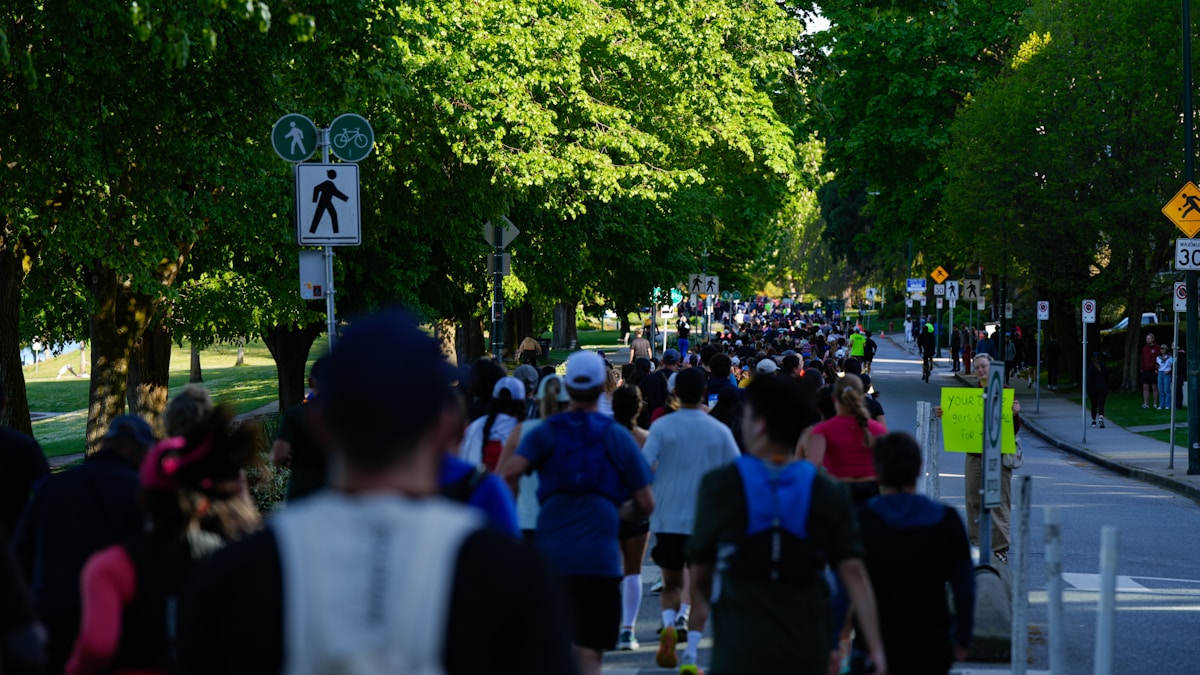
Running 26.2 miles is hard. Doing it alone for 16 straight weeks is harder. Find people to train with. Group long runs make Saturday mornings something to look forward to instead of dread.
Our staff can make some recommendations for you, including local routes, hills, and races. The right shoe matters too. A proper gait analysis before a marathon training cycle can flag issues you didn’t know you had and help you avoid the kind of nagging injuries that take down so many first-timers.
Get to the Start Line Healthy
The runners who finish marathons aren’t the ones who train the hardest. They’re the ones who train the smartest. Build a base. Follow the 80/20 rule. Anchor your weeks around long runs, eat for the work you’re doing, get strong outside of running, and pay attention when your body asks for a day off.
If you’re in the middle of fall marathon training and want help dialing in your shoes, your fueling, or your training routes, stop by the store. We’ve watched a lot of Metro East runners go from their first 5K to their first marathon over the years, and we’d love to be part of your story too. Stop in at 3260 Green Mount Crossing Dr. in Shiloh, or give us a call at 618.628.9898. We’re here for the whole journey.