
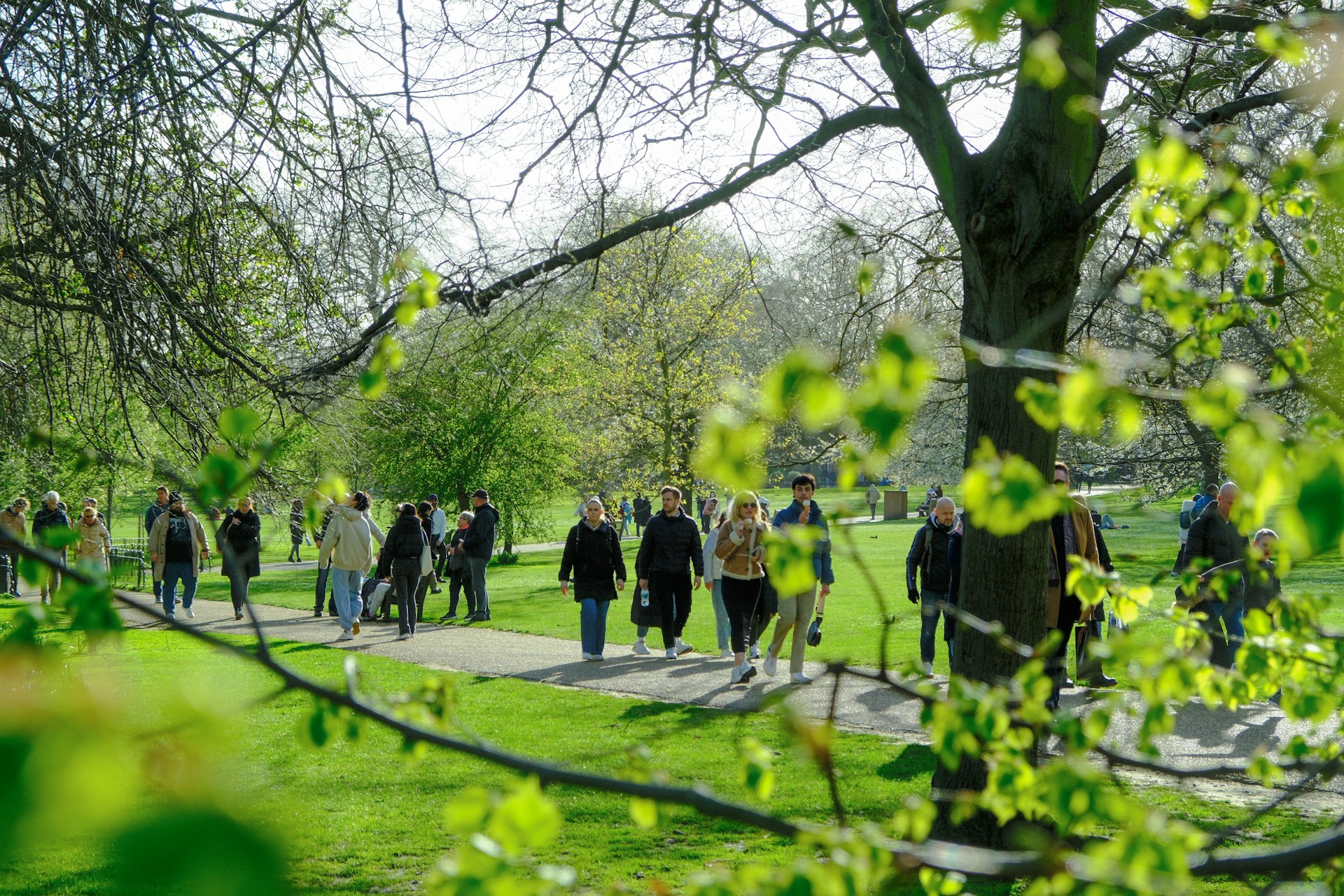
The first warm week in the Metro East is a kind of unofficial holiday. Sidewalks fill up, dog leashes come out of hibernation, and people who haven’t moved much since November are suddenly looking at their shoes wondering if they’d survive a mile. If that sounds like you, walking for fitness and health is one of the easiest, most forgiving ways to get going again.
It’s also one of the most underrated. Walking gets dismissed as a warm-up for “real” exercise, but the research keeps pointing the other direction. The federal Physical Activity Guidelines for Americans put brisk walking right alongside running on the list of recommended moderate-intensity activities, and the heart, mood, and longevity benefits show up at much lower thresholds than most people think.
Here’s what we’ll cover: how much you actually need, what to put on your feet, a beginner-friendly routine, places to walk in Shiloh and around the Metro East, and a few mistakes worth avoiding.
Walking Counts as Real Exercise
Don’t let anyone tell you walking is just a warm-up. The CDC counts a brisk walk as moderate-intensity aerobic activity, the same category as cycling or recreational swimming. The recommended dose for adults is 150 minutes per week, and that can be broken up however your schedule allows: thirty minutes five days a week, three ten-minute sessions a day, or one long Saturday loop with shorter strolls during the week.
The heart-health case is settled. Regular walking lowers blood pressure, reduces the risk of type 2 diabetes, and helps manage weight. The mental-health side is just as strong. Harvard Health highlighted research showing that 75 minutes per week of moderate-intensity exercise like brisk walking was linked to an 18% lower risk of depression, with the benefit climbing to about 25% at 2.5 hours per week.
And it’s gentle. Walking puts about 1.5 times your body weight through your feet with each step. Running puts roughly three times. That difference is why walking is often the first activity recommended after an injury, after pregnancy, or for anyone whose knees have opinions about pavement.
How Much Walking Is Enough?
You don’t need 10,000 steps a day. That number got famous in the 1960s through a Japanese pedometer marketing campaign, not a study. The actual research is friendlier than the legend. A large Harvard analysis found that mortality benefits start showing up around 4,400 steps a day for older women and keep rising until they level off near 7,500. Cardiovascular benefits appear at even lower totals.
That doesn’t mean more is bad. It means a beginner shouldn’t feel like they have to hit a five-digit goal on day one to count.
A simpler way to think about it: aim for about 30 minutes of brisk walking, five days a week. That’s the 150-minute mark the federal guidelines point to. “Brisk” is the keyword. You should be moving fast enough to feel a little warm and breathe a touch heavier, but still able to talk in full sentences.
Quick check on intensity:
- You can hold a conversation but not sing
- Your heart rate is up but you’re not gasping
- You feel warmer within five minutes
That’s the zone where walking earns its place as exercise.

Walking Shoes vs. Running Shoes (and Why It Matters)
The shoes already in your closet might be the reason your feet hurt. Walking shoes and running shoes look similar, but they’re built for different jobs. Walking shoes have a softer, more flexible forefoot that lets your foot bend through each step. The heel is angled to absorb impact at the back of the stride, since walkers strike heel-first almost every time. Running shoes are stiffer, with a thicker midsole built for the heavier impact of a runner’s landing.
According to Harvard Health, you can walk comfortably in running shoes, but you really shouldn’t try to run in dedicated walking shoes. Most walkers do best in something with a flexible toe-bend, real arch support that matches their foot, and enough room for the toes to splay.
If you’ve been walking in old tennis shoes from the back of the closet and your feet ache, the shoes are usually the first thing to fix. A proper fitting matters more than brand loyalty. Our guide to choosing running shoes walks through the same fundamentals (heel cup, midfoot snugness, half-thumb at the toe) that apply to walking too.
That’s where a real fitting helps. At Toolen’s, we watch how you walk before we put anything on your foot.
A Simple Walking Routine to Get Started
Start smaller than you think you should. Most beginner setbacks happen in the first two weeks, when ambition outruns conditioning. The plan below is built for someone walking from a near-zero base. Adjust up or down to match your own starting point.
- Week 1: 15 minutes, four days. Conversational pace.
- Week 2: 20 minutes, four days. Add one minute of brisk pace per walk.
- Week 3: 25 minutes, five days. Two short brisk intervals per walk.
- Week 4: 30 minutes, five days. Steady brisk pace through the middle of each walk.
By the end of four weeks you’ve hit the 150-minute weekly threshold without forcing it.
If you live with kids, walks are some of the easiest workouts to share. Stroller walks, sidewalk-chalk pit stops, and bike-and-walk loops all count. Our piece on running as a family covers similar habits for families with older kids, and the same logic applies to walking.
One more piece of the puzzle: rest days are not wasted days. Active recovery and sleep are where the adaptations actually happen.
Where to Walk in the Metro East
Where you walk shapes how often you walk. A boring loop in your subdivision is fine for the days you don’t feel like driving anywhere, but having a few favorite scenic routes turns walking from a chore into something you look forward to.
A few popular spots around Shiloh and the surrounding area:
- The MetroBikeLink Trail: a 14.5-mile paved corridor running from the Fairview Heights Transit Center to the Shiloh-Scott Transit Center. Flat, shaded in stretches, and easy to access from a handful of trailheads.
- O’Fallon Family Sports Park: a 1-mile walking path with restrooms and a fishing pond on a 200-acre site.
- Shiloh village park: a half-mile mulch trail looping Fields B and C, friendly for shorter walks and easy on knees.
- Bicentennial Park (Belleville): a flat, picturesque loop popular with families.
Our list of top running trails in the Metro East covers more of these in detail, and most of those routes are just as good on foot at a walking pace.

Three Mistakes That Trip Up Beginners
Three patterns we see over and over at the store.
- Doubling distance too fast. A jump from 15 minutes to 45 in the same week is how shin splints show up. Add 10% per week at most.
- Walking through foot or knee pain. Soreness is fine. Sharp pain that comes back every walk is information, not a test of toughness. Stop, rest, and get checked.
- Wearing whatever is by the door. Old casual sneakers with collapsed midsoles transfer impact into your knees and lower back. If your shoes are over a year old or have visible wear on the heel, they’re working against you.
Most of these are easy to fix once you spot them. None of them are reason to quit.
Lacing Up From Here
A walking routine doesn’t have to be elaborate to count. Thirty minutes most days, supportive shoes, and a route that doesn’t bore you to tears. That’s the whole formula. Walking for fitness and health rewards consistency more than intensity, which is part of why it works for so many people who tried other things and stalled out.
If you’re starting out and want a hand picking the right shoe, drop into Toolen’s at 3260 Green Mount Crossing Dr. in Shiloh. We’ll watch you walk, talk through what you’re feeling, and find a fit that actually matches your foot. No pressure, no rush, no upsell. Just what you need to get out the door tomorrow morning.