
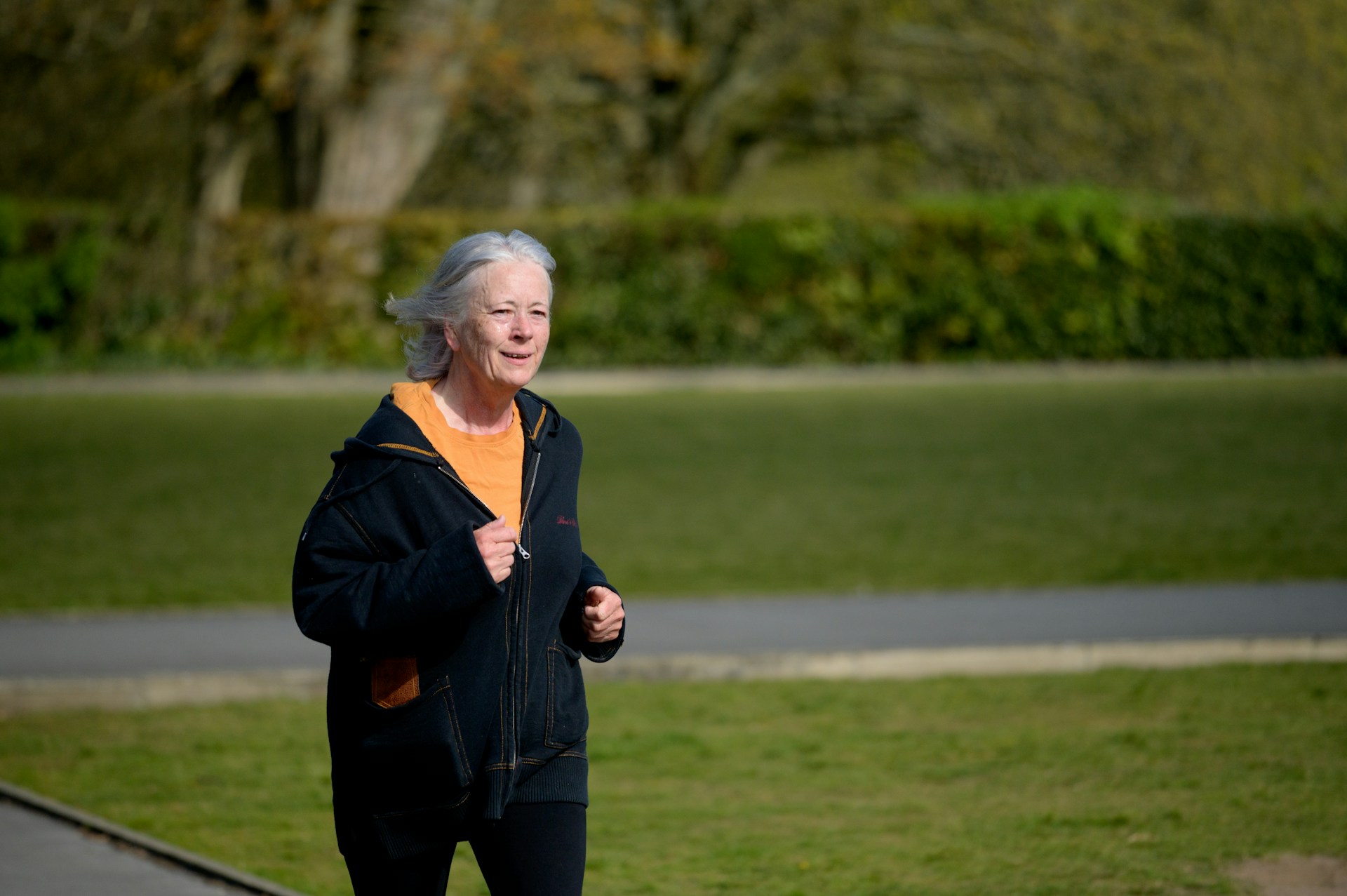
A 70-year-old logging 30 miles a week is more common than you’d think. Plenty of Toolen’s regulars are in that camp, having either kept running their whole lives or come back to it well into adulthood. Running after 50 looks different than running at 30, but different is not the same as worse. With smarter training and a little more attention to recovery, the second half of your running life can be the best part.
This guide covers what changes in your body after 50, how to adjust your training, what role strength work plays, and how to keep your motivation strong for the long haul. Aerobic capacity drops about 10 percent per decade for sedentary people, but active runners can cut that loss roughly in half. The story isn’t decline. It’s adaptation.
What Actually Changes When You Run After 50
Your engine still works. It just runs a little quieter. After 50, two things start to push back on your running. VO2 max, the measure of how much oxygen your body can use during hard effort, drops faster than it did in your 30s and 40s. Muscle mass shrinks by 3 to 5 percent per decade after 30, and that decline accelerates after 50.
Tendons and ligaments take longer to adapt to training load. Recovery from hard sessions stretches from 24 hours to 48 or 72. AARP’s overview of how training shifts after 50 walks through the same changes in plain language.
None of this means stopping. It means listening more carefully. A run that wrecked you for a day at 35 might wreck you for three days at 55. The training stays effective. The dose changes.
The good news is the most important thing about your aerobic system, the part that lets you run at all, responds to training the same way it always did. Plenty of athletes in their 60s and 70s post VO2 max numbers that put 30-year-olds to shame, just by training consistently year after year. The decline isn’t a cliff. It’s a long, gradual slope, and how you train shapes how steep it gets.
Run Less Hard, Run Smarter
Frequency over intensity is the move after 50. Research published in the American Journal of Sports Medicine found that running 3 to 4 times a week strikes the right balance once you’re past 50. It’s enough to keep cardiovascular fitness high without piling on the kind of overuse injuries that send people to physical therapy.
The other shift: easy runs should feel genuinely easy. Conversational pace. Nose breathing if you can. The most common trap after 50 is gray-zone training, where every run is moderately hard. That used to be sustainable. Now it just leaves you tired and slightly inflamed all the time. Save the harder efforts for one or two structured workouts a week and make the rest comfortable.
Speed work still belongs in your routine. Power and fast-twitch muscle fibers fade faster than aerobic capacity does, and short, controlled intervals are the antidote. Strides, hill repeats, or 3 to 6 minute repeats at 5K effort all do the job.
Strength Training Isn’t Optional Anymore
At 50, strength training does for your running what easy miles did at 30. Two or three short sessions a week, 20 to 30 minutes each, protect your joints, preserve muscle, and improve running economy. One review from Strength Running notes that consistent strength work can cut running injury rates by as much as half.
You don’t need a gym. Bodyweight squats, lunges, single-leg deadlifts, calf raises, and core work cover most of what runners need. Add weight when you can. The point is to keep the muscles around your hips, knees, and ankles strong enough to handle the impact of running.

Recovery Becomes Part of the Training
Staying healthy past 50 isn’t about doing more. It’s about recovering more. Sleep, easy days, and mobility work aren’t afterthoughts at this stage. They’re part of the training itself, and the runners who keep going for decades treat them that way.
Warm up longer than you used to. Five to ten minutes of dynamic movement and an easy jog before the work starts. Cool down with light stretching and walking. On hard-effort days, sleep does more for recovery than any foam roller.
There’s a striking finding in the ultramarathon world: ultrarunners over 50 actually get hurt less than runners in their 20s. Years of running teach you when to back off before something tears. Trust those signals when they show up.
Fueling Bones, Muscles, and Long Runs
Protein, calcium, and vitamin D start to matter more after 50. Muscle protein synthesis becomes less efficient as you age, which means you may need a little more protein than the standard recommendation suggests. Spread it across the day instead of loading it all at dinner.
Bone health gets a vote too. Calcium and vitamin D keep bones dense, and that matters for anyone taking thousands of impacts per mile. If you’re a woman who has gone through menopause, this becomes especially important.
Hydration deserves a closer look as you age. Thirst signals get less reliable, and the kidneys hold onto water differently than they used to. Sip on long runs even if you don’t feel parched, and keep an eye on electrolytes during summer training in the Metro East.
A New Definition of Personal Best
Running after 50 isn’t about chasing the times you ran at 30. It’s about staying connected to the part of yourself that loves moving. Some runners set new goals: a first marathon at 60, a return to 5Ks after years away, a streak of 100 days of running. Some just want to feel good Monday through Friday.
Mike Toolen, who started Toolen’s back in 1998, was a serious competitive racer himself, with seasons that stacked up 60-plus events at distances from 5Ks to marathons. Talk to him in the store and you’ll hear the same thing: staying in it for the long haul means letting the goal evolve. Speed gives way to consistency. Race times give way to streaks of healthy years on the road.

Where Toolen’s Fits In
Running after 50 rewards patience, not stubbornness. The body that took you through your 20s and 30s wants different inputs now. More strength work. More sleep. More attention to the easy days. Less ego on the hard ones.
If you’ve been running for decades or you’re just lacing up at 55, the staff at Toolen’s Running Start can put you on the right pair of shoes for your stride and your stage of life. The in-store gait analysis takes about 20 minutes and often changes someone’s relationship with running. Pair it with a few of the habits in our injury prevention guide and you’ve got a recipe for keeping the miles going for another decade or two.
Stop in at 3260 Green Mount Crossing Drive in Shiloh, or give us a call at 618.628.9898. We’ll meet you wherever you are in your running life.